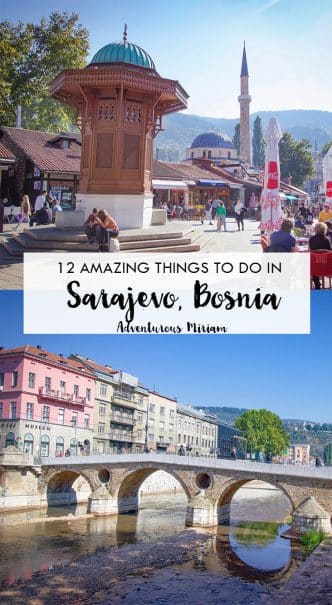
12 things to do in Sarajevo, Bosnia – the most underrated capital in the Balkans

Often, I talk to people who are asking if Sarajevo is a great destination and if there’s enough to do to keep them busy for a few days.
Well, I am here to say that there’s MORE than enough to keep you occupied in the capital of Bosnia and Herzegovina! And these are some of the best things to do in Sarajevo!
Plan your trip to Sarajevo
🇧🇦 Best guided tours in Sarajevo:
- Sarajevo War Tour (⭐ 5/5)
- 4-Hour Food And Craft Tour (⭐ 5/5)
- Private Walking Tour, Food Tasting and Bosnian Coffee (⭐ 5/5)
🤍 Where to stay in Sarajevo:
- Great location: Old Town Hotel (⭐ 9.3)
- Apartment: Apartment Vatra (⭐ 9.8)
- In the Old Town: Hotel Sana (⭐ 9.0)
A month ago I was on a plane to Tuzla in Bosnia.
As we were about to land, I looked down on the lush mountains blanketed with cute Monopoly houses and towering minarets. And then I wondered what Bosnia and Herzegovina would be like.
I love that feeling. You know, when you’re about to enter a country for the first time.
As I was about to find out, Bosnia’s capital, Sarajevo, is nestled in a mountain valley. It’s a beautiful city with some of the world’s friendliest people. But most of us only know it for two reasons. Both have to do with war.
Stick around and I’ll share the best things to do in Sarajevo with you.
This post contains referral links for products I love. Adventurous Miriam earns a small commission at no extra cost to you if you purchase through my links. I appreciate your support ♡ Learn more
Sarajevo’s war-torn past
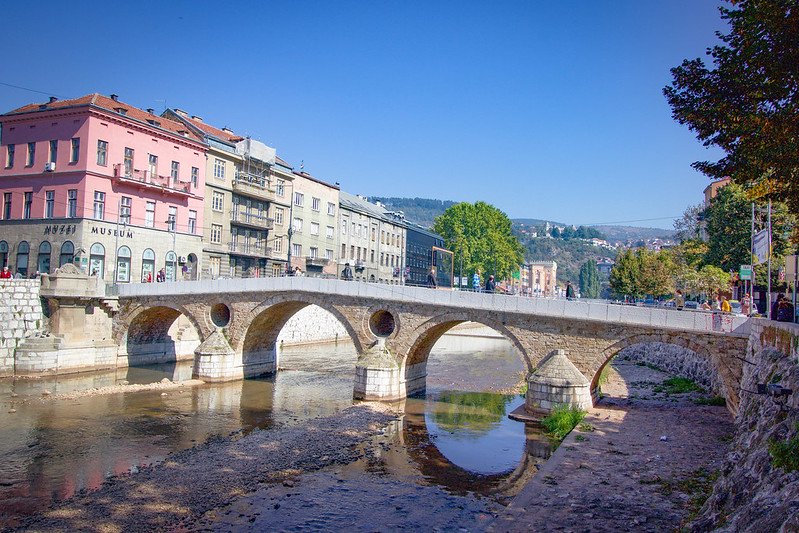
It was June 28, 1914, when a fatal gunshot fired beside Sarajevo’s Latin Bridge killed Franz Ferdinand. That’s the Austrian-Hungarian crown prince, of course, not the Scottish rock band.
Ferdinand’s murder triggered a series of events that eventually ignited World War I, which ended up claiming more than 16 million lives.
The other conflict ended just 20 years ago. From 1992 to 1996, Sarajevo was held under siege by the Serbian army. During that time, the city was hit by 329 grenades a day on average and snipers fired at men, women, and children.
Imagine fearing for your life every day. For many Bosnians, this is how life was during the siege.
When the conflict ended nearly four years later, more than 10.000 had been killed in Sarajevo and 100.000 lost their lives throughout Bosnia.
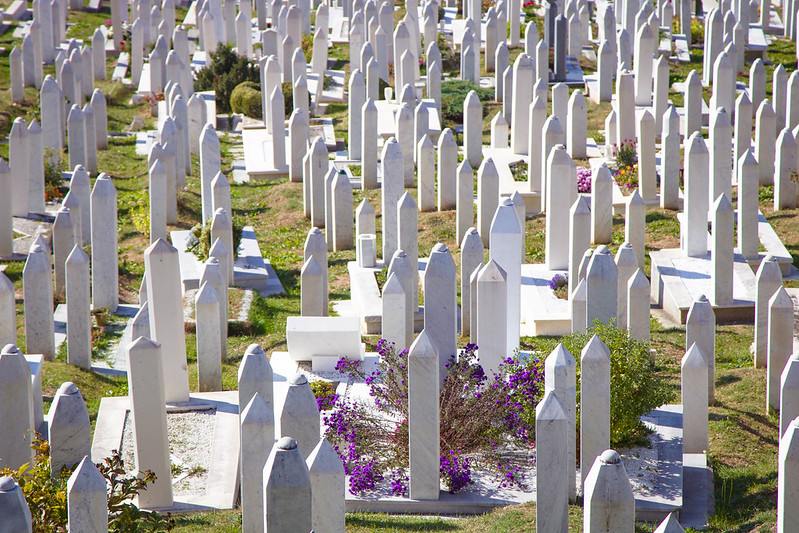
Evidence of the battles waged are still easy to spot around Sarajevo. Whether you come face-to-face with bullet-ridden buildings, pass the seas of white crosses, or visit one of the city’s war museums, you’ll get a glimpse into what life was like during those dark times.
However – and this is a big, however – Sarajevo is thriving today. So much in fact that it’s even been picked as one of Lonely Planet’s Best Cities to Visit and one of Europe’s most underrated capitals.
For me, the biggest charm was the city’s traditional authenticity. Of all the Old Towns I’ve visited in Europe, Sarajevo is the most authentic with an incredible old-world feel.
If you arrive in Tuzla
Wizz Air flies to and from Tuzla and offers SUPER cheap flights from Scandinavia, and Central and Eastern Europe. I found cheap tickets at $45 for a round-trip fare from Denmark.
Tuzla is a 2.5-hour drive from Sarajevo, but with a private transfer, it’s easy and convenient to reach. We went with Balkan Transfer, which I collaborated with, and we had such a great experience.
They pick you up right outside the airport (which is really small), and they’ll wait if your flight is late. It felt really safe and very convenient.
You can read more about Balkan Transfer here.

The best things to do in Sarajevo
1. Latin Bridge
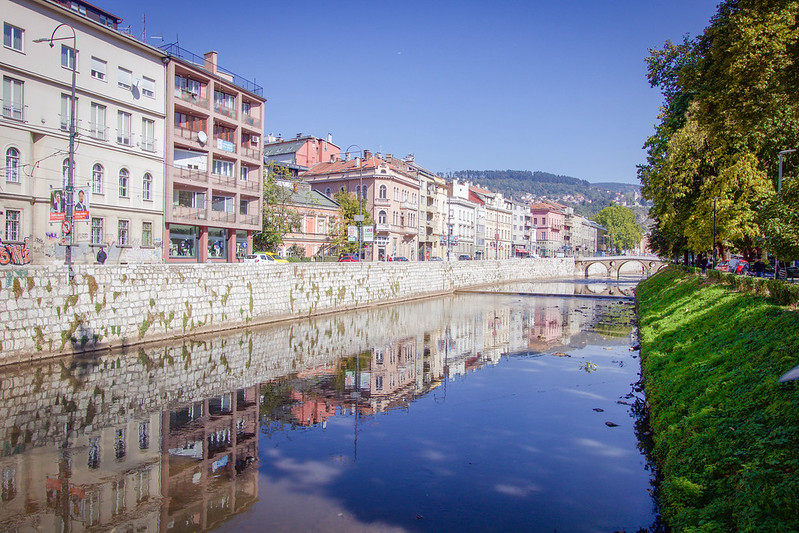
Our first stop of the day was the Latin Bridge. This is where Prince Ferdinand and his pregnant wife were killed by Bosnian-Serb Gavrilo Princip on the 28th of June, 1914. Princip was just 19 years old.
If you walk to the northern end of the bridge, you’ll see the spot of the assassination.
2. City Hall
Entry fee: 5 EUR
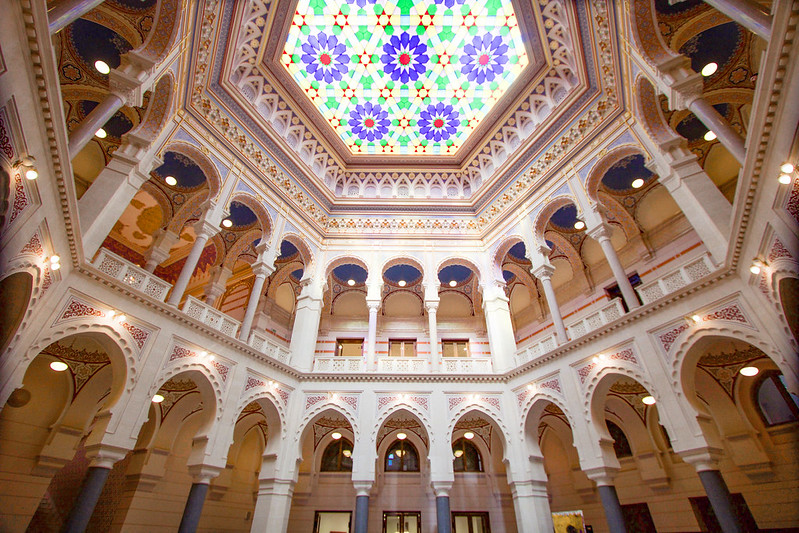
Right next to the Latin Bridge and the Old Town, you’ll find the City Hall (Vijećnica).
It was midday (a.k.a nap time) when we visited and Theo was in a mood, so I didn’t really get to explore the full scope of it. But when you enter, this is what you’re met with ↓
The city hall was destroyed in 1992 by Serb forces but rebuilt in 2014.
3. Sarajevo Old Town
Sarajevo’s Old Town is the heart of the city, and it’s got an authentic feel unlike any other I’ve seen.
I mean, it has remained pretty much the same since the 15th century. If it’s the medieval relics like the giant Aladdin’s lamp in the below photo or the war souvenirs, I don’t know.
It’s just packed with Eastern mystique.
Read next: Mostar: the most popular town in Bosnia
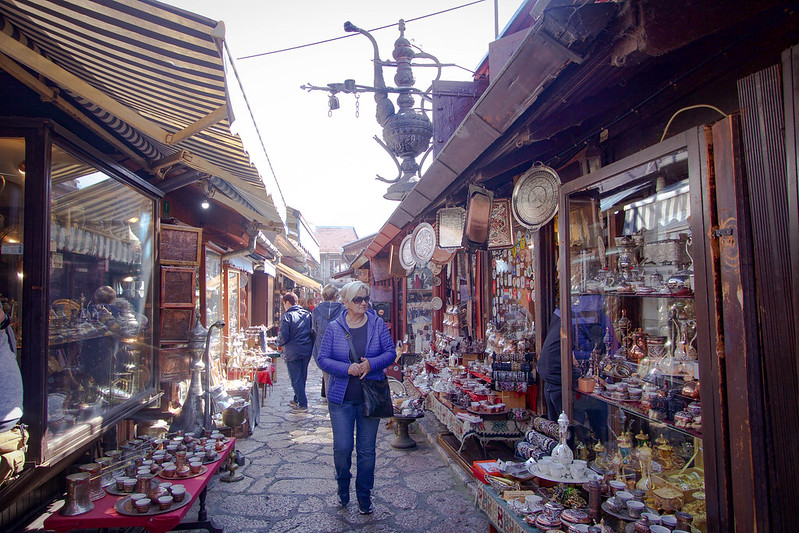

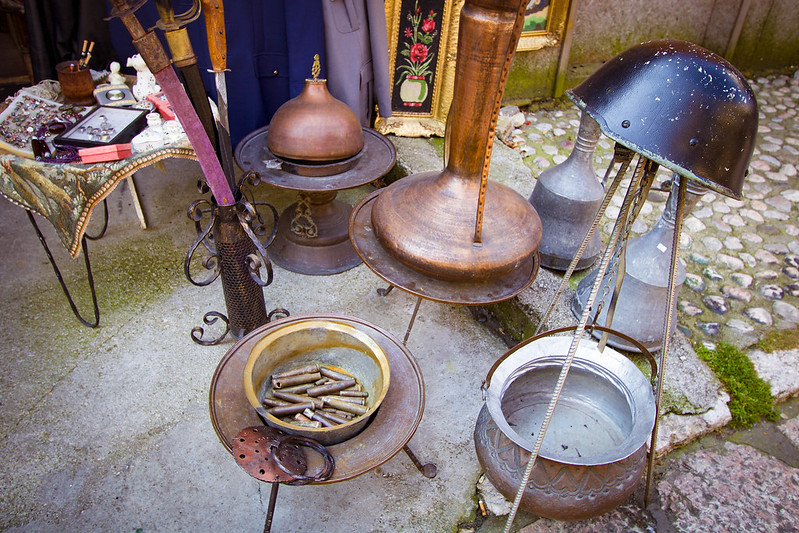
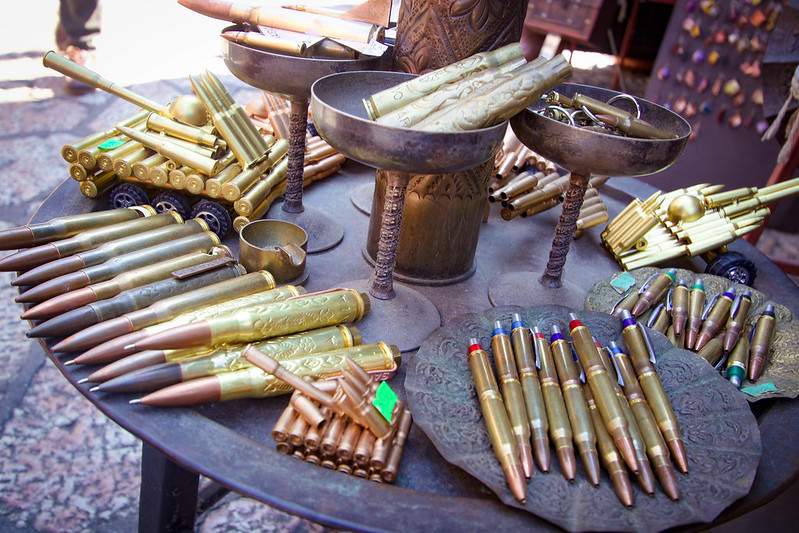
In Sarajevo Old Town I found something I’ve only seen in Skopje’s Old Town: old ammunition and other war-related souvenirs like helmets, badges, and knives.
Just a word of advice; if you buy some of these – as exciting as it may be – bringing used bullets onto an airplane or in your luggage may not be such a great idea.
4. Sebilj Fountain
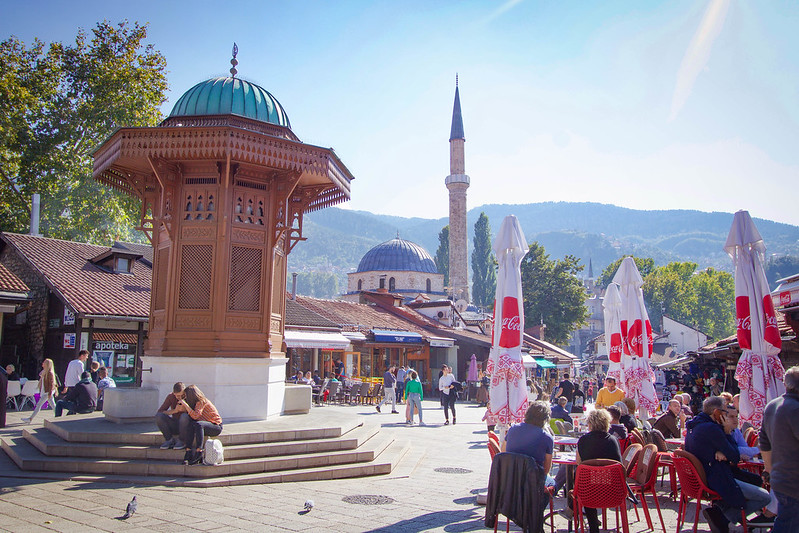
If you’ve ever seen a photo of Sarajevo, I bet it looks like this.
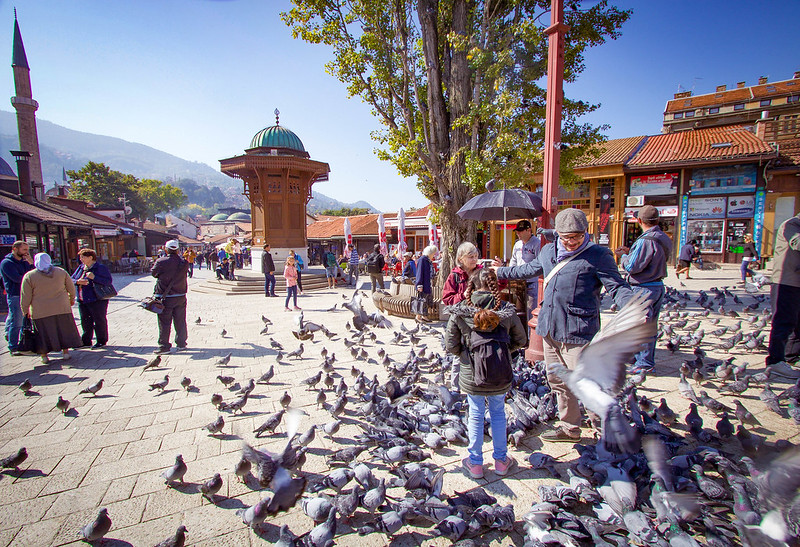
This is Sebilj fountain, a symbol of Sarajevo and a magic well from 1753. Legends say that whoever drinks water from it will return to Sarajevo. I didn’t have a sip, but I could easily picture myself coming back someday.
Right next to it is the pigeon square. I’ll give you one guess on how it got that name.
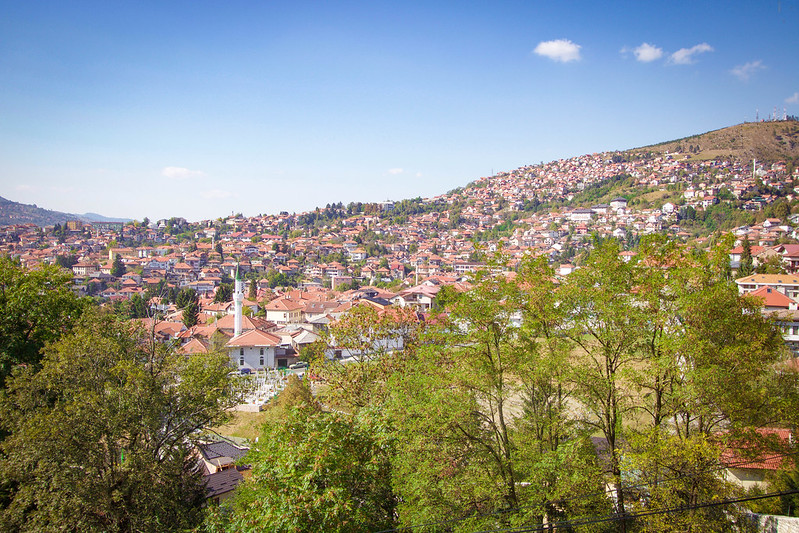
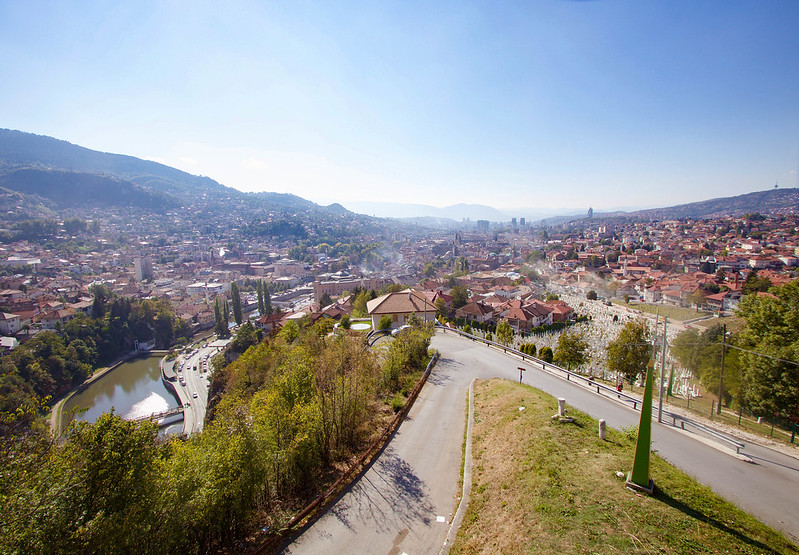
5. The Yellow Fort
To get the absolute best view of Sarajevo, you should head to Yellow Fort. Although I have no idea why it’s called that because there is no fort.
However, where the fort is, isn’t, or once was, you’ll get THE best view of Sarajevo. Plus, this is also where you’ll find Kovaci Cemetery, the final resting place of those killed during the 1990s conflict.
Read next: 7 most beautiful places in Bosnia and Herzegovina
6. Sarajevo Tunnel of Hope
If you’re a history buff or know a lot about the conflict in Sarajevo, then you’ve probably heard of the Tunnel of Hope. As for everyone else… it’s known as the tunnel that saved Bosnia.
During the siege of Sarajevo, the city was cut off from the rest of the world. The only link to the outside was an 800m-long, 1m-wide tunnel, allowing food, war supplies, and humanitarian aid to come into the city, and allowing people to get out.
The tunnel is fairly easy to reach, so if you’re in Sarajevo, you should visit.
7. Sarajevo’s abandoned Bobsleigh Track
So, I didn’t make it here, but everyone said that I should really see the abandoned Bobsleigh track. It’s probably worth visiting if you’ve got time.
In 1984, this is where Sarajevo hosted the Olympics, then the Serbs used it as a base during the siege and today it’s covered in cool graffiti art.
It’s located on Mount Trebevic about an hour’s walk from the center, but I recommend taking a taxi, the cable car or joining an organized tour.
Read next: 10 tips for visiting Kravice Waterfalls, Bosnia’s paradise
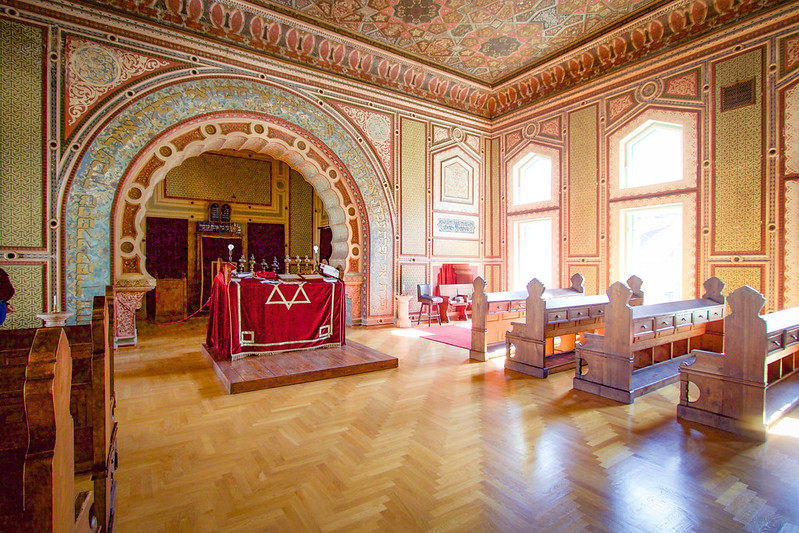
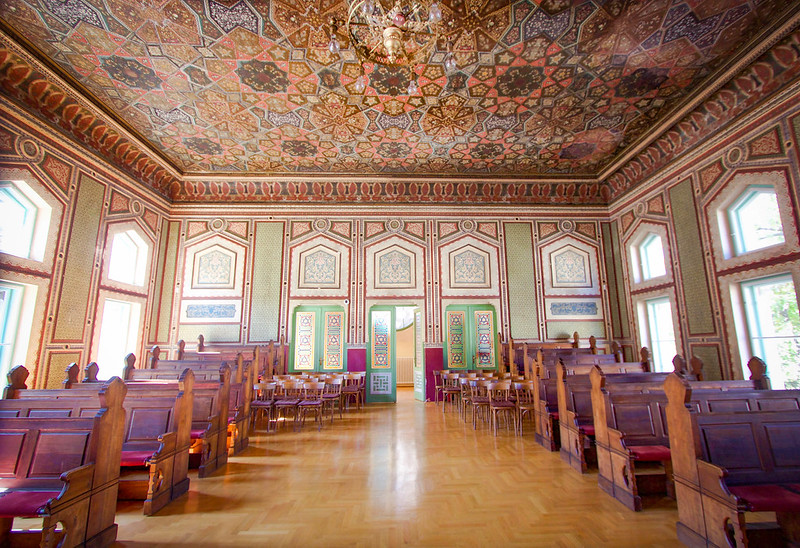
8. Ashkenazi Synagogue
Entry fee: $1.2
The Ashkenazi synagogue was one of my favorite things to do in Sarajevo.
Why? Because there are basically no people there. Well, except for the local Jews who attend service here.
If you’re a fan of religious buildings and pretty interiors, then this is for you.
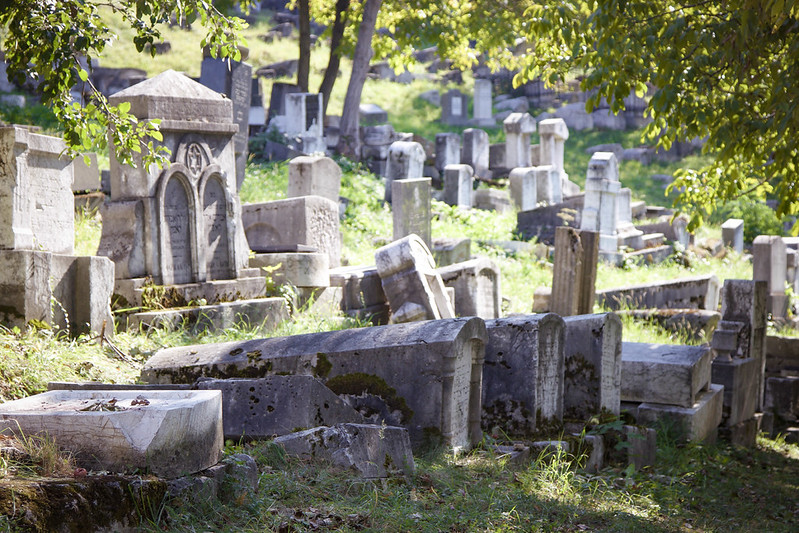
9. Jewish Cemetery
After the synagogue, we went to the Jewish cemetery, which is actually the second largest in Europe after the one in Prague. I don’t know what it is about cemeteries, but they intrigue me.
Not in a dark twisty kind of way, but honestly I prefer this ↓ any day over shopping and regular sightseeing.
The Jewish cemetery is a bit tricky to reach. You can’t really go there on foot, but you can grab a taxi, which is what we did. We just asked the driver to wait for us outside.
Read next: The Ultimate Balkan Travel Guide
10. Gazi Husrev-Beg Mosque
Entry fee: $2.1
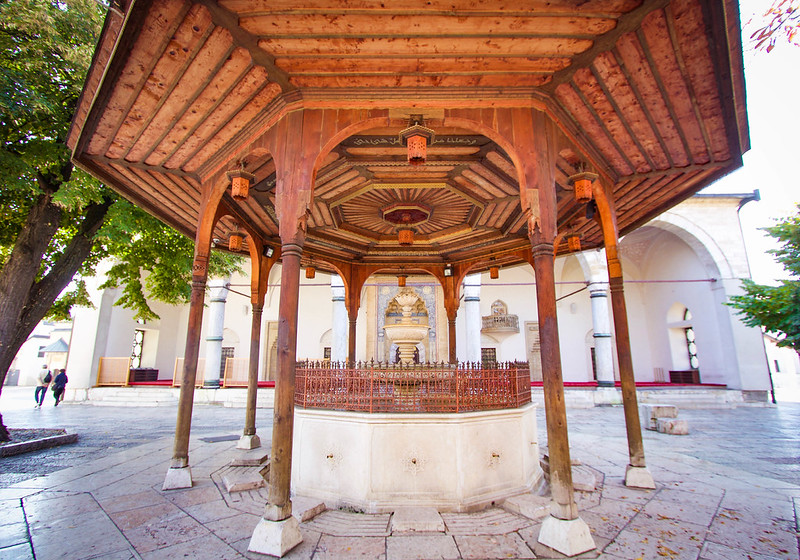
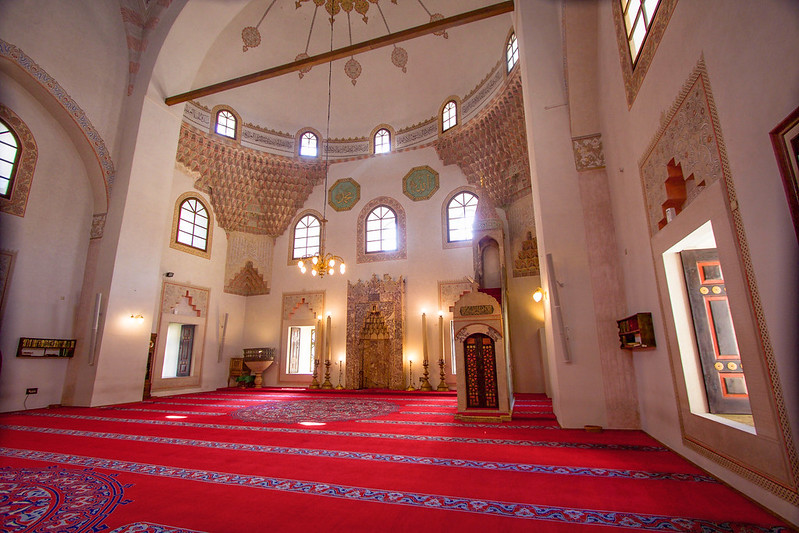
Back in the Old Town where most of the action is, you’ll find the Gazi Husrev-beg mosque.
It deserves a visit because it’s the largest historical mosque in Bosnia and one of the most representative Ottoman structures in the Balkans. And it’s photogenic, which is reason enough for me.
Also, I liked visiting churches, a synagogue, and a mosque while I was in town. They showed the religious diversity and how people from different faiths coexisted in Sarajevo both before and after the war.
11. The Eternal Flame
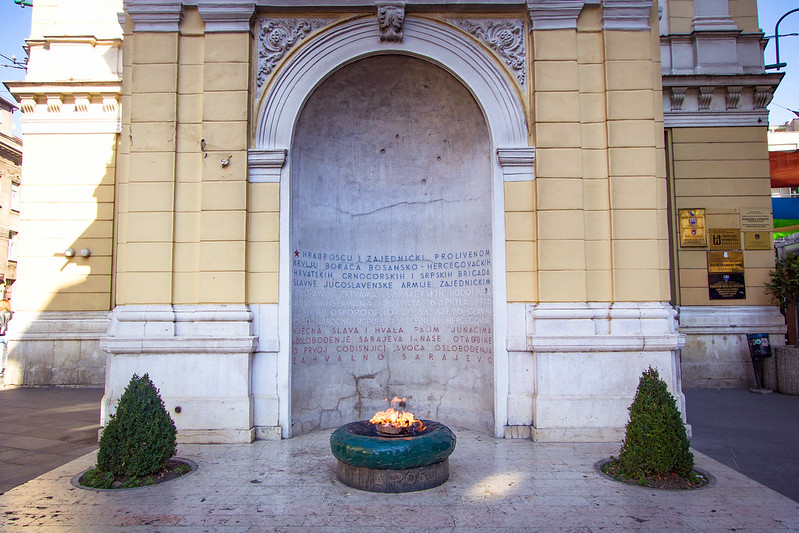
The last sight on the checklist is the Eternal Flame, which is a memorial to the victims of World War II in Sarajevo.
It’s a short walk from the Old Town and pretty easy to reach.
12. The best Sarajevo food and drink
And now onto the food!
I say this about most places I visit, so of course I’m going to say it here as well: the food is totally amazeballs.
Honestly, I didn’t expect much from Bosnian food. I figured it would be different from Croatian food, which is probably my favorite food in the whole wide world along with Thai, Mexican, and Middle Eastern.
And although it was different, Bosnian food was still super delicious. It’s really flavorful with a Greek/Turkish flair – I had not expected that at all.
Oh, and you can read all about Croatian food in my post here.
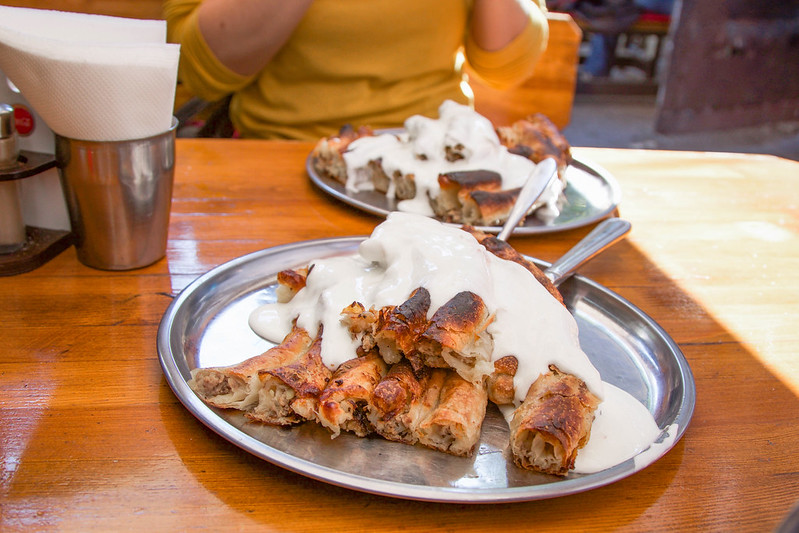
If you’re looking for traditional Bosnian food, you should try these delicious dishes: cevapi (grilled meat like kebab), burek (pastry dough with meat), raznijci (kind of like souvlaki), uštipci (pancakes), and of course Bosnian coffee, which deserves a chapter on its own.
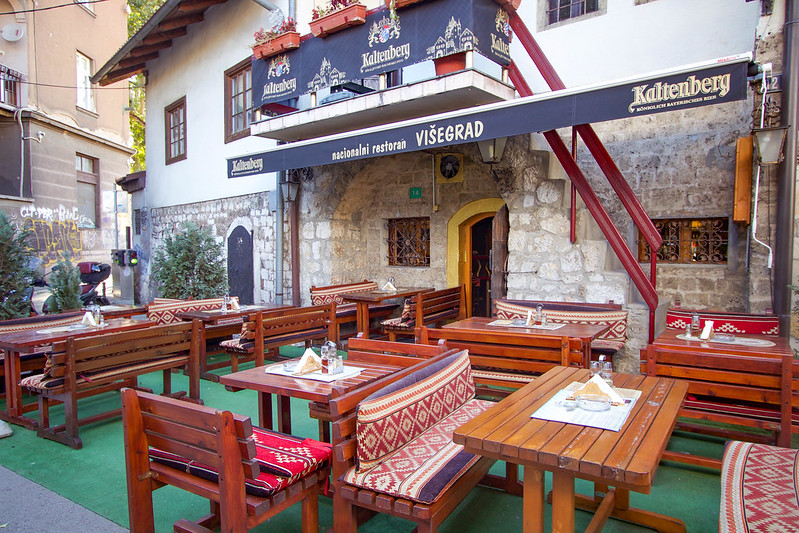
The best restaurants for Bosnian food in Sarajevo:
- Caffe Tito (for coffee)
- Zeljo (for cevapi)
- Buregdninica Sac (for Burec)
- Barhana
Local food markets
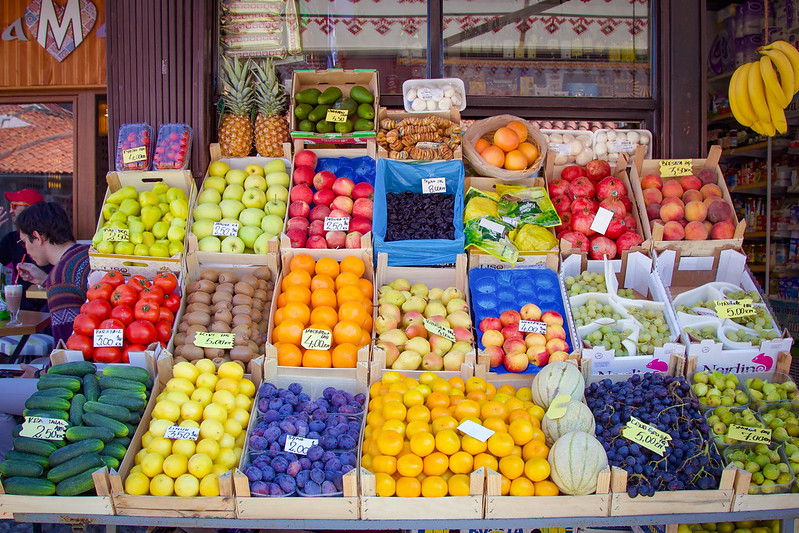
For some reason, I always look for local food markets when I travel. Not to buy anything because I never really do, but food markets are always packed with atmosphere.
When you visit a food market, you get to really see the locals; what they eat, how they dress, and how they interact. If you’re looking for real cultural insight, a food market will give it.
Where to stay in Sarajevo
I stayed at Apartment Vatra, which is located right next to the Eternal Flame and a 10-minute walk from Sarajevo Old Town.
The apartment was really spacious and super neat. It had two bedrooms and a living room, and everything was new and modern.
All rooms have flat screens and air conditioning. If WHEN I return to Sarajevo, I’ll definitely stay here again.
Get the latest prices for Apartment Vatra here: booking.com
FAQ – Best things to see in Sarajevo Bosnia
Is Sarajevo worth visiting for tourists?
Yes, I recommend a trip to Sarajevo!
It’s got a mix of history, cool vibes, and amazing scenery. Plus, the food’s awesome and the people are super welcoming. Definitely worth a visit.
Is 2 days enough in Sarajevo?
Two days in Sarajevo gives you a taste, but it’s tight. You can hit the major spots like Baščaršija, the Latin Bridge, and the War Tunnel Museum. To really soak in the vibe and explore more, like the surrounding mountains, more time would be better.
How many days do you need in Sarajevo?
Ideally, spend around 2-3 days in Sarajevo. This allows you to explore the key historical sites, enjoy the cuisine, and maybe take a day trip to nearby attractions. It gives you a good balance between sightseeing and soaking in the local atmosphere.
Should I visit Mostar or Sarajevo?
Choosing between Mostar and Sarajevo depends on what you’re after.
Mostar is famous for its stunning Old Bridge and a more laid-back vibe, great for those interested in Ottoman architecture and history.
Sarajevo, with its rich history, diverse culture, and vibrant streets, offers a deeper, more varied experience.
Get more tips about Bosnia
- Everything you need to know before you visit Bosnia
- 10 tips for visiting Kravice Waterfalls
- 10 legendary things to do in Mostar
- 7 most beautiful places in Bosnia and Herzegovina
Save it!