How to easily take the hydrofoil to Peterhof Palace St Petersburg

Wondering how to take the hydrofoil to Peterhof Palace? Get all the info you need right here.
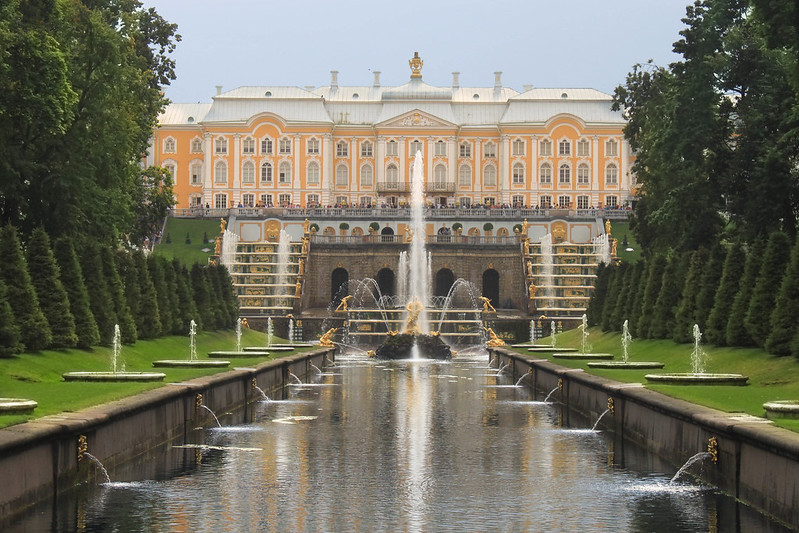
The impressive Peterhof Palace is one of the best things to do in St Petersburg. Crowned a UNESCO World Heritage site in 1990, this architectural masterpiece of majestic palaces and gardens is often referred to as the “Russian Versailles”.
Peterhof Russia lies a mere 28 km from St Petersburg, and it’s easy to visit on a day trip.
This post contains referral links for products I love. Adventurous Miriam earns a small commission at no extra cost to you if you purchase through my links. I appreciate your support ♡ Learn more
How to take the hydrofoil to Peterhof
There are several ways to get from St Petersburg to Peterhof Palace. If you arrive by train & bus (1,5 hours) or minibus (about 1 hour), you’ll approach the palace from the Upper Garden.
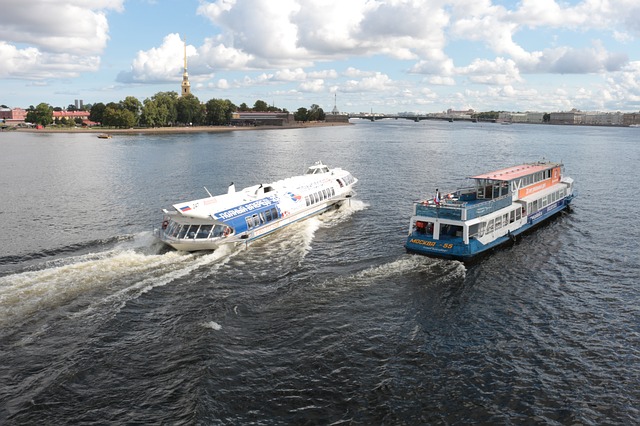
A more scenic route to Peterhof is by hydrofoil (45 minutes). The hydrofoil (so-called meteors) is the most expensive option, but it is also the most comfortable. You will arrive in the Lower Park.
One of the great things about taking the hydrofoil to Peterhof is that you’ll sail past some of the main sights in St Petersburg such as the Summer Palace and the Winter Palace.
It’s a great way of experiencing the city from a different side.
This is how to do it:
- Go to the Hermitage and walk past the guides and tour busses to the dock.
- Buy a ticket at the counter. The salesperson might not speak English but don’t worry. Just say “Peterhof” and hand over the money ($19.04 for a round-trip)
- The hydrofoil leaves every half hour. When it arrives, get onboard.
- 45 minutes later, you’ll arrive at the lower gardens.
- Leave the boat and go to the ticket counter at Peterhof.
- That’s it!
Which company to choose
The two most popular hydrofoil companies that offer transportation by hydrofoil to Peterhof are Peterhof Express and Russian Cruises. I went with Peterhof Express and enjoyed my trip.
It doesn’t really matter which company you choose as the price is more or less the same. What differs is that some of the companies provide online tickets while others don’t. Also, their departure location is different.
Where is the hydrofoil located?
All the hydrofoils depart from berths (every company operates its own berth).
They’re located either on the Dvortsovaya embankment opposite the Hermitage Museum or on the Angliyskaya embankment opposite the St. Isaac’s Cathedral.
Tickets and duration
A one-way ticket costs $10.2 and a round-trip is $19.04.
The hydrofoils depart from St. Petersburg every half hour from 10 am to 6 pm. The return trip from Peterhof to St. Petersburg departs every half hour from 10:30 am to 7 pm.
Have everything taken care of
If you’re on vacation and want someone else to take care of the planning, you can book a trip with Get Your Guide.
A trip includes a ride with the hydrofoil, a guide at Peterhof, and entrance fees. You can find the latest prices and book here. The guide will meet you in St Petersburg and take you to Peterhof and back.
How to buy an entrance ticket for Peterhof
Once you’re at Peterhof, you need to buy a ticket. The entrance fee to the lower park is 1,000 rubles (US $15).
There are 10 museums and a total of 23 attractions at Peterhof. You’ll need to buy separate tickets for each museum (prices vary for each museum). You can buy a combined ticket at the entrance OR buy a ticket at the various museums.
You certainly don’t need to visit ALL of them to experience the place. You can get an overview of prices and the opening hours here.
Pro tip: Don’t pay the entrance fee twice
After touring the Grand Palace, I ventured to the Upper Gardens and had to learn the hard way that once you go out of the Lower Park, you have to pay the entrance fee ($15) to re-enter.
Even if you’re only heading straight to the hydrofoil boat to get back to the city. So that was annoying, especially because there weren’t any warning signs saying: “Hey foreigners, when you see a sign that says EXIT, it means you’re ex-it-ing.”
There’s a small cafeteria and a tiny kiosk right outside the Lower Gardens. But be aware that also here you have to pay the entrance fee if you want back in.
Introduction to Peterhof Palace
Peter Alexeyevich – also known as Peter the Great – was Tsar of Russia from 1682 to 1721 when he founded the Russian Empire.
He built Peterhof Palace in 1709 (which means Peter’s court in German). Around that time, from 1700 to 1721, Russia was at war with Sweden, and a decisive battle in Ukraine became the turning point of the whole war.
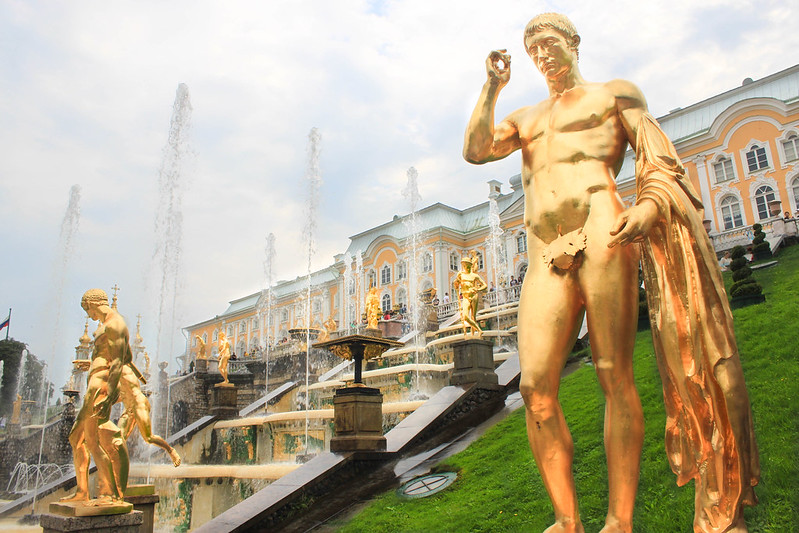
The Tsar wanted to celebrate this victory so he dedicated Peterhof to the victory over Karl XII. He got the inspiration for the palace design during a trip to France where he saw Chateau de Versailles.
If you’ve been to Versailles, you can probably see the resemblance with this St Petersburg palace.
However, one grand difference is the fountain complex, which is conceived on a much larger scale with gilded figures and several springs of sparkling water.
What to see at Peterhof
As mentioned, Peterhof consists of 10 museums. They each have separate opening hours and entrance fees, so make sure to research this ahead of time.
Also, most of them are NOT baby carriers and wheelchair accessible.
The most important things to see at Peterhof are:
- Peterhof Gardens (Lower Park with Fountains and Upper Garden)
- Grand Palace
Lower Park with Fountains
The hydrofoil arrives by the entrance to the Lower Park, so let’s start there.
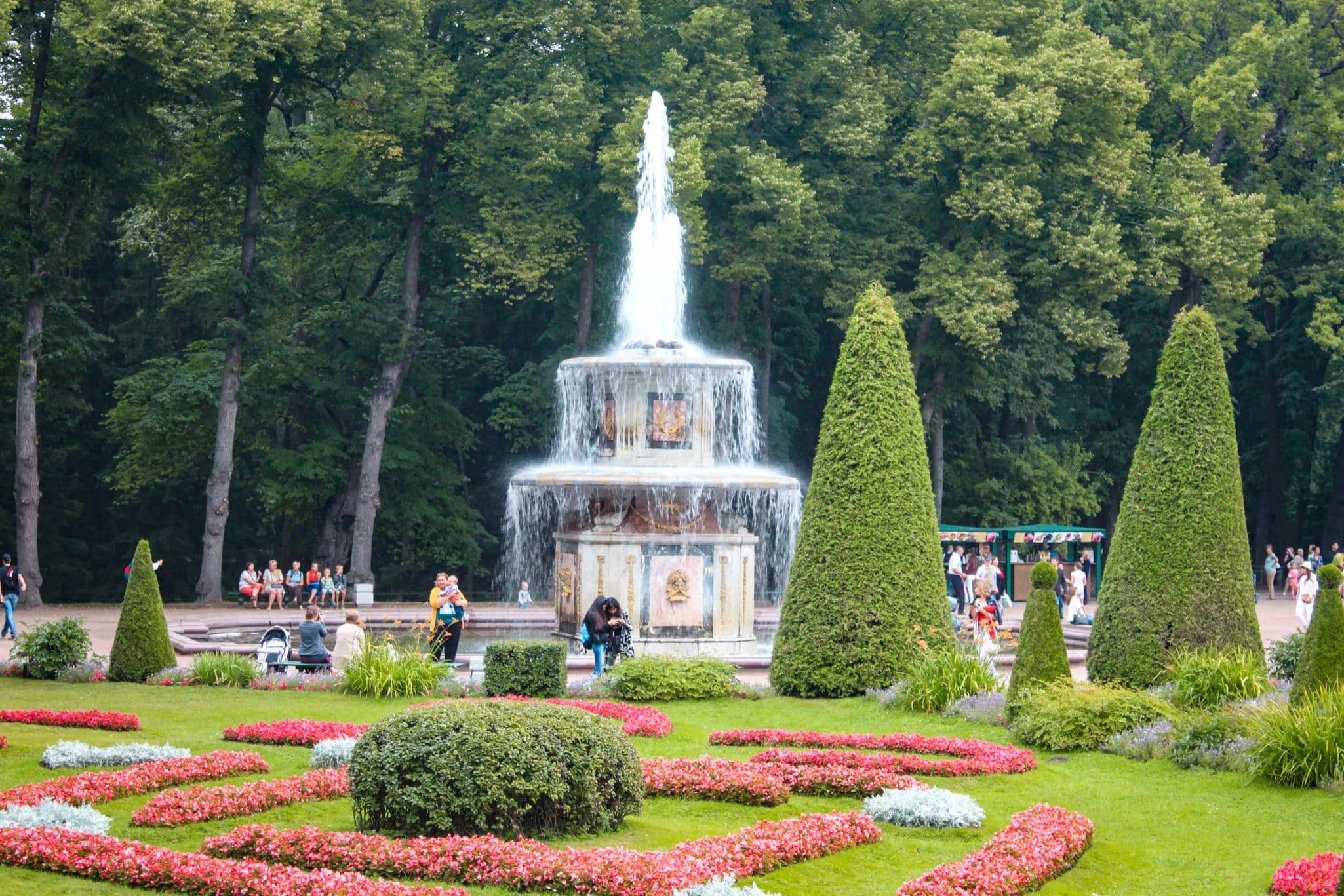
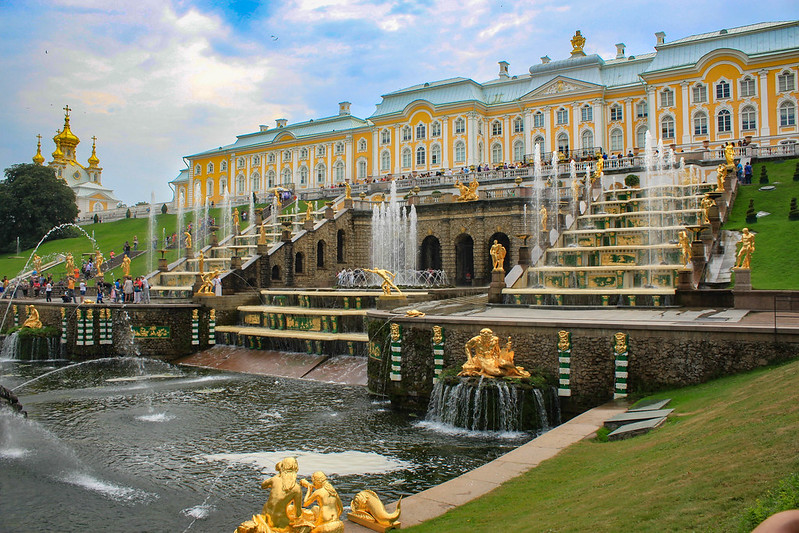
The beautiful Lower Park has no less than 150 fountains and four cascades, impressive sculptures, and sculptured trees and bushes. Here are the highlights:
Northern Terrace View
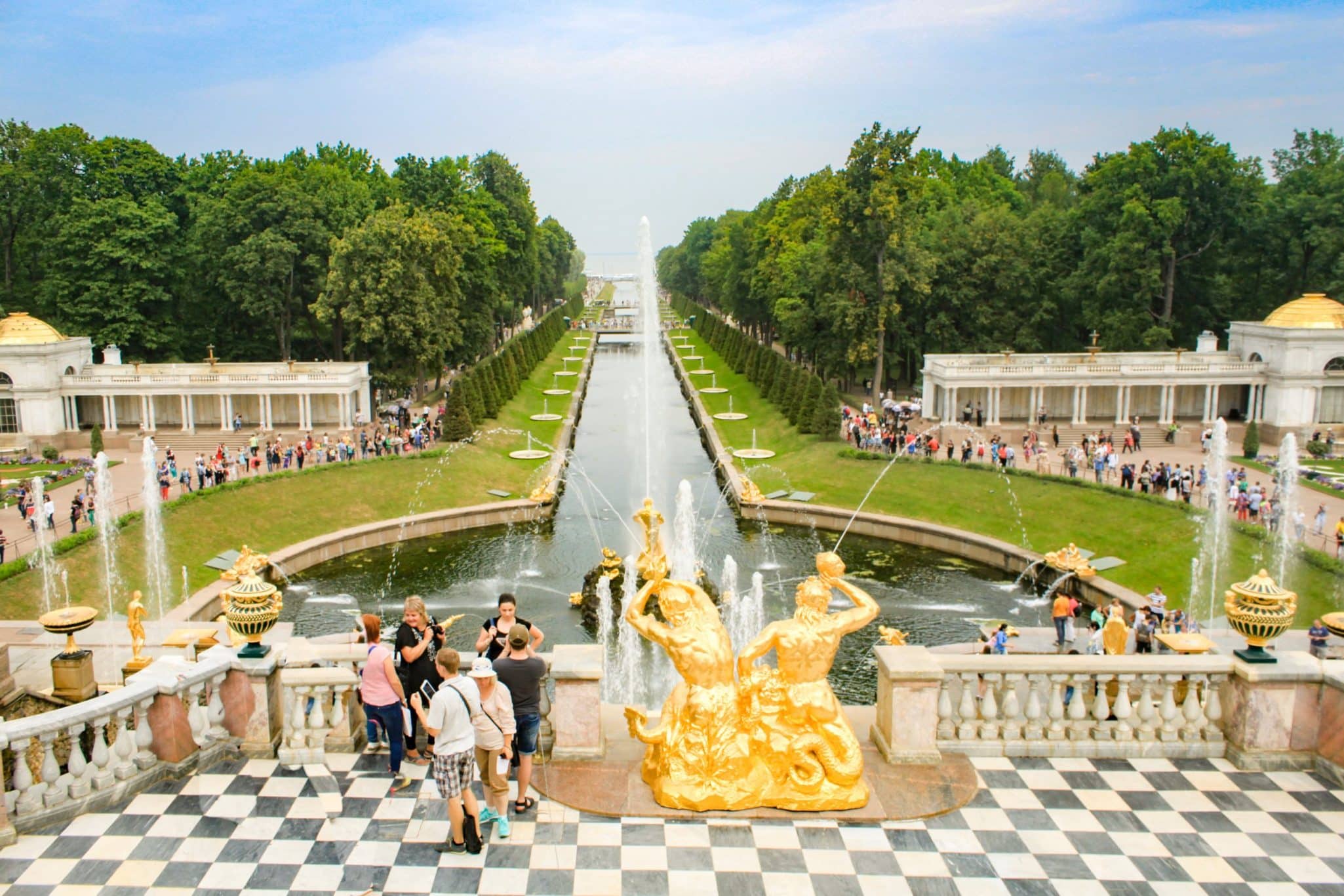
In front of the Grand Palace is a checkerboard-tiled terrace that offers a spectacular view.
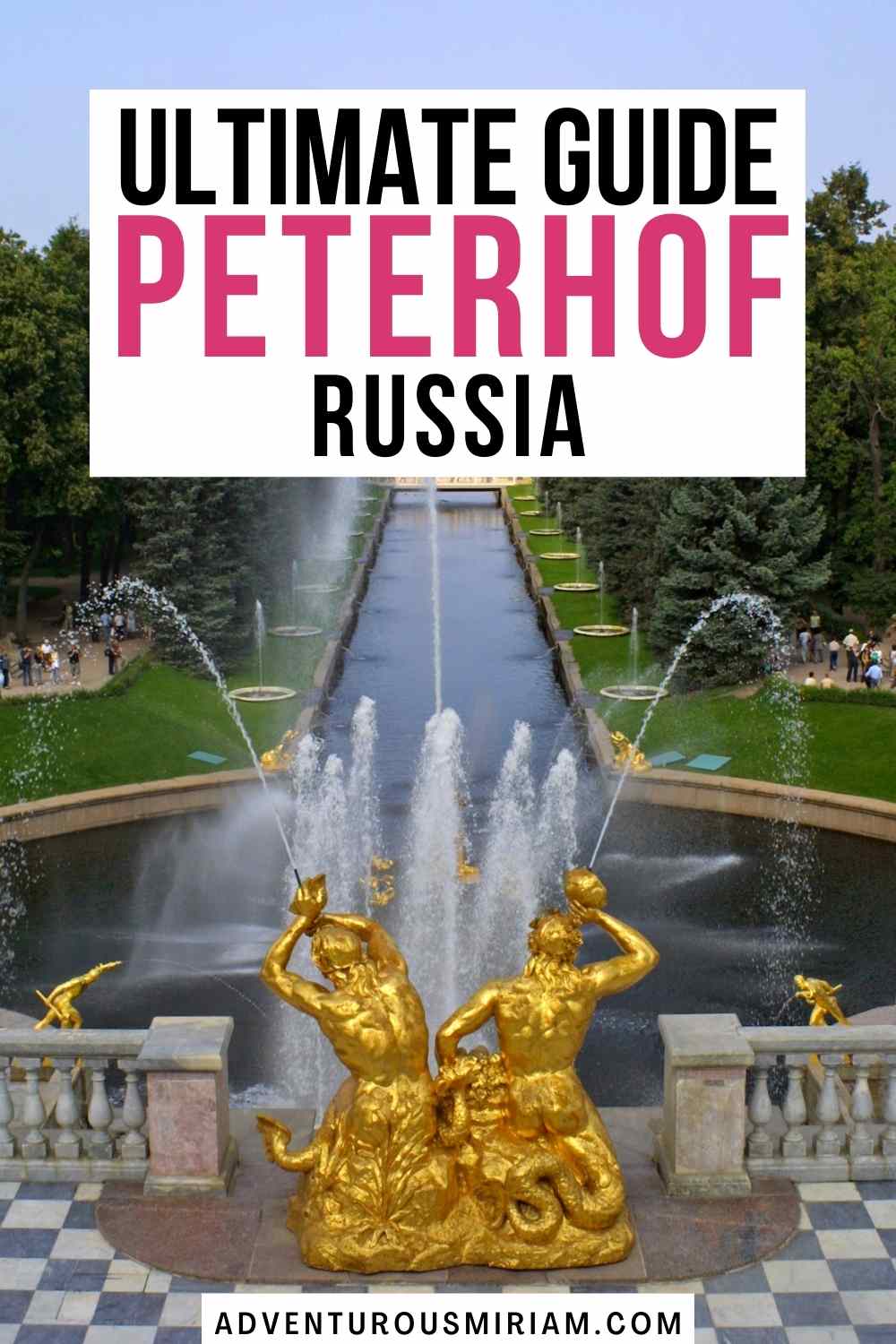
Stand behind this marble balustrade and savor the moment. The two fountains, Neva and Volkhov, represent two rivers in northwestern Russia. Just below the terrace is the grandiose Grand Cascade.
The Grand Cascade
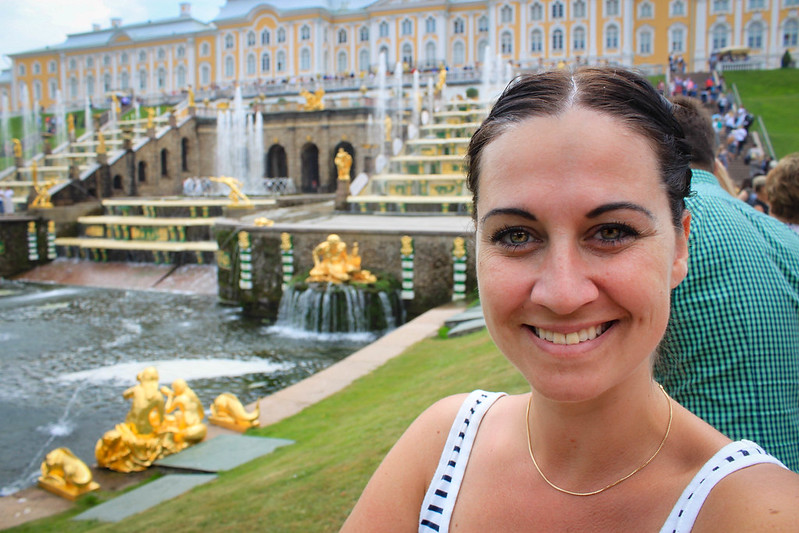
The most impressive cascade at Peterhof is the Grand Cascade. It’s situated above the upper and lower grottos.
Created in 1721, the Grand Cascade is among the world’s most sumptuous water fountains.
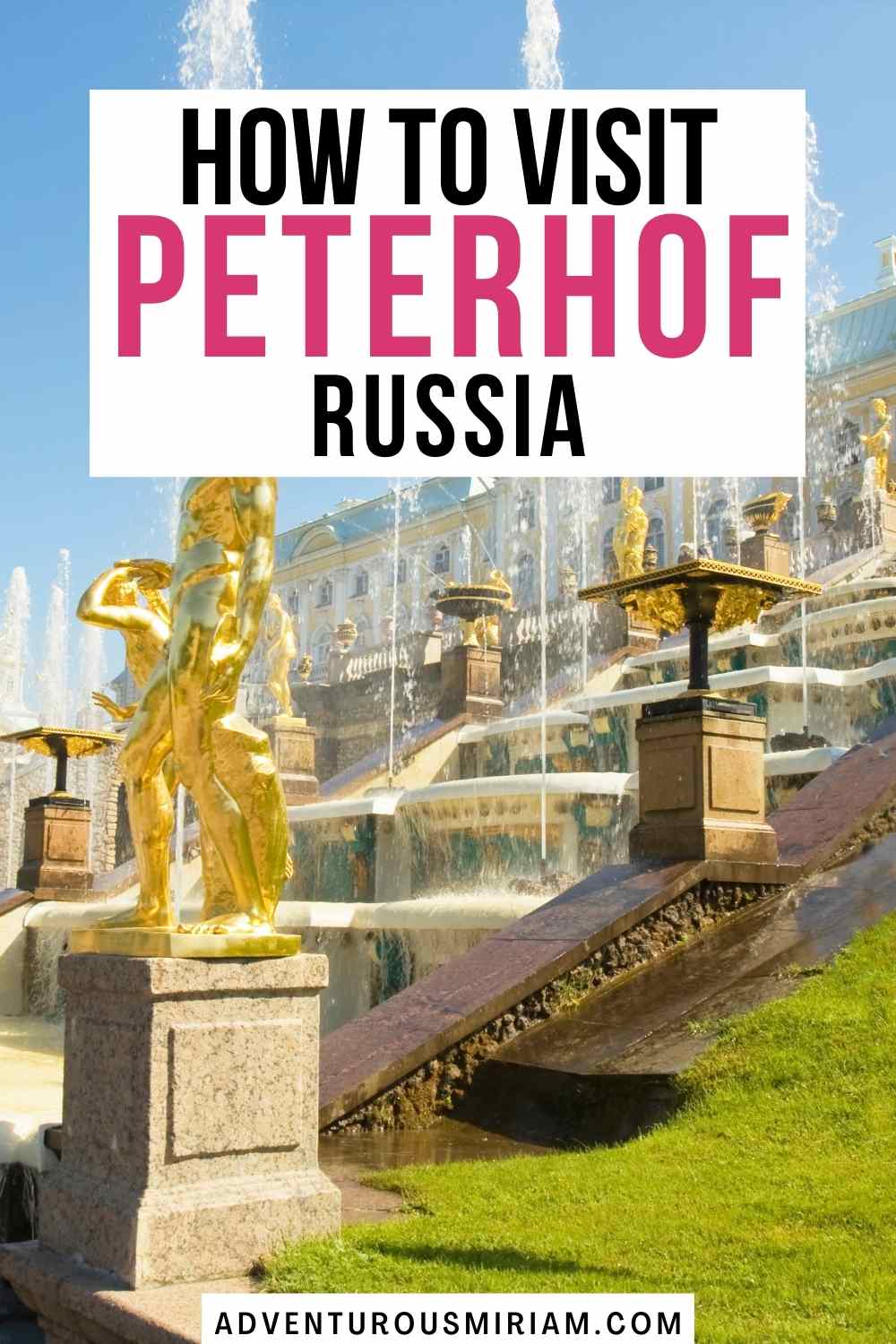
Water runs down two sets of seven stairs accented by gilded sculptures. The Grand Cascade features 64 fountains, and 37 sculptures, plus bas-reliefs, vases, and statues of dolphins, lions, and frogs.
It’s truly a masterpiece!
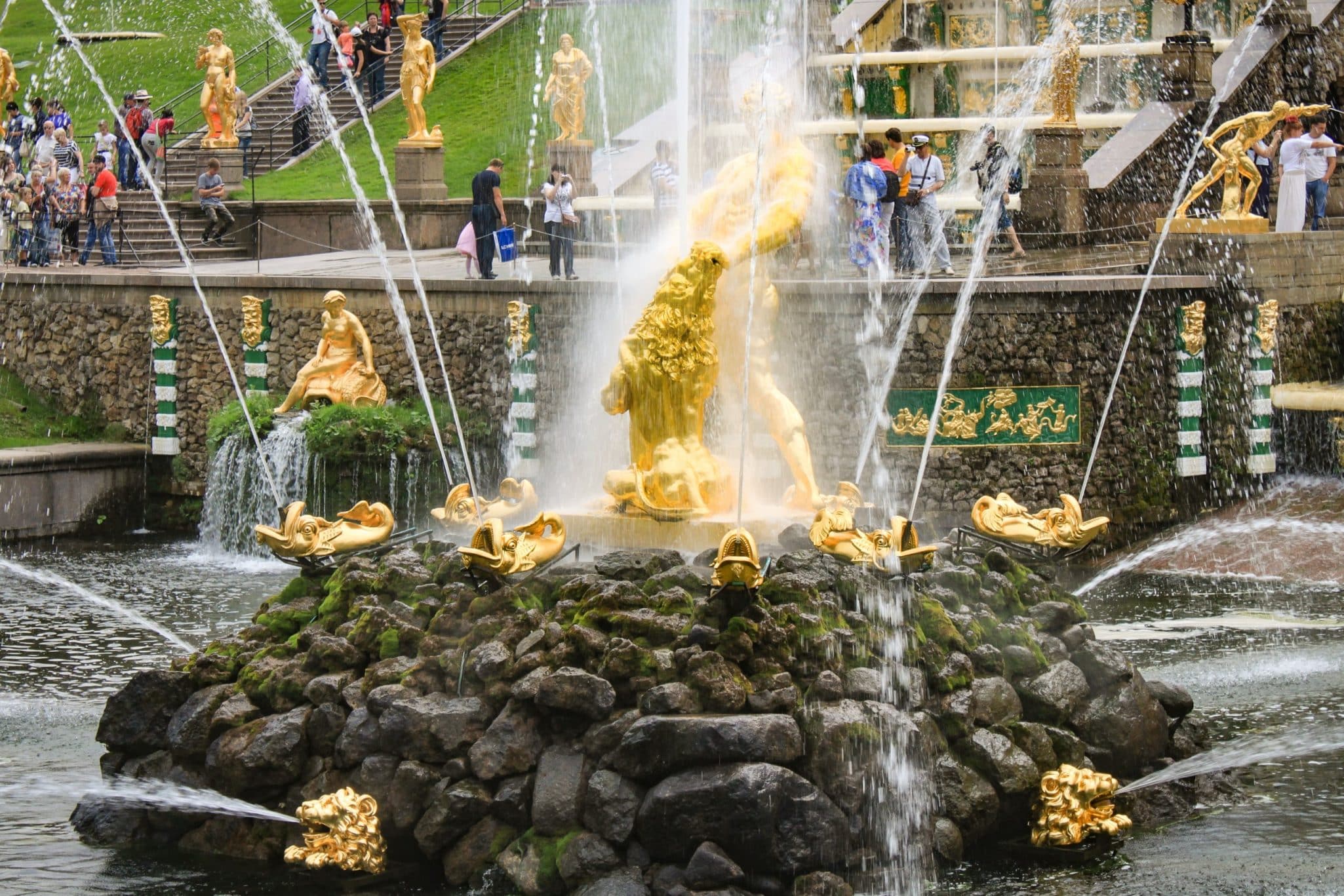
Samson Cascade
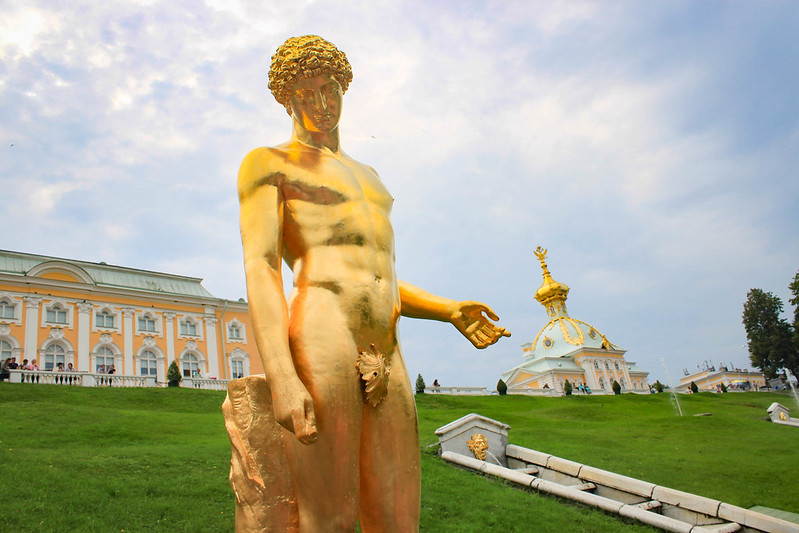
At the top of the Grand Cascade is Samson. Notice how he’s tearing open a lion’s jaw. It symbolizes – as so many things in St Petersburg do – Peter the Great’s victory over Sweden.
It shoots a 20-meter-high water jet from its mouth without a pump.

Upper Garden
The impressive Upper Garden dates back to the reign of Empress Elizabeth (1741-1762) and surrounds the Grand Palace.
Tree-lined paths flank eight rectangular sections divided by two center walkways.
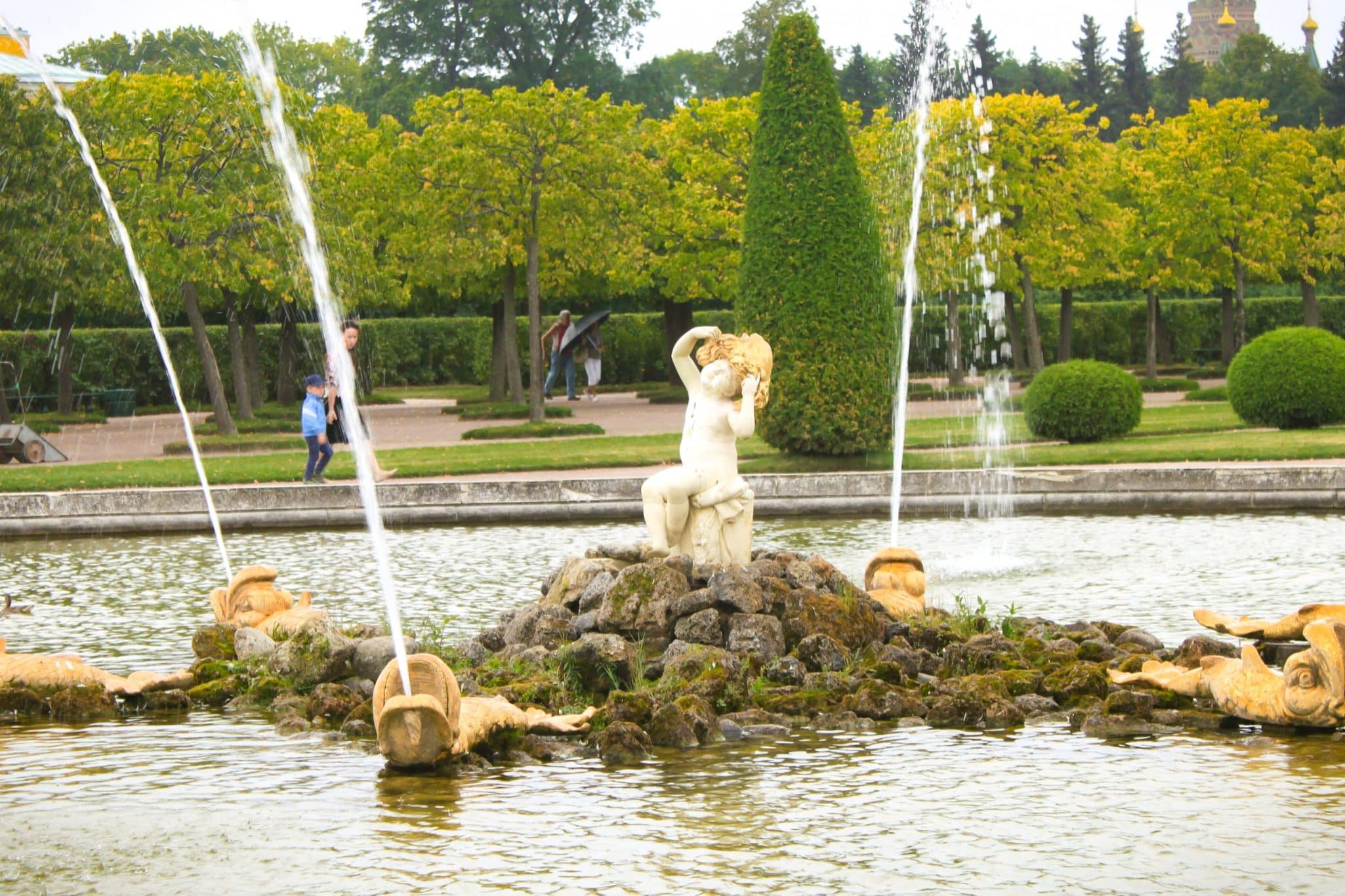
The beautiful lawn is highlighted with flowers, five fountains, and sculpted bushes. You’ll also find four marble statues of Roman deities created by Italian sculptor Antonio Bonazza in 1757.
Neptune
The most noteworthy baroque sculptural group is “Neptune”, which you’ll find in the central pool. The sculpture of Neptune, the mythological god of the sea, has been there since 1799.
Other fountains
- Belvedere Apollo
- The Oak fountain
- The two square ponds (near the Grand Palace) with classical Italian sculptures
Oranienbaum Private Chapel (Court Church)
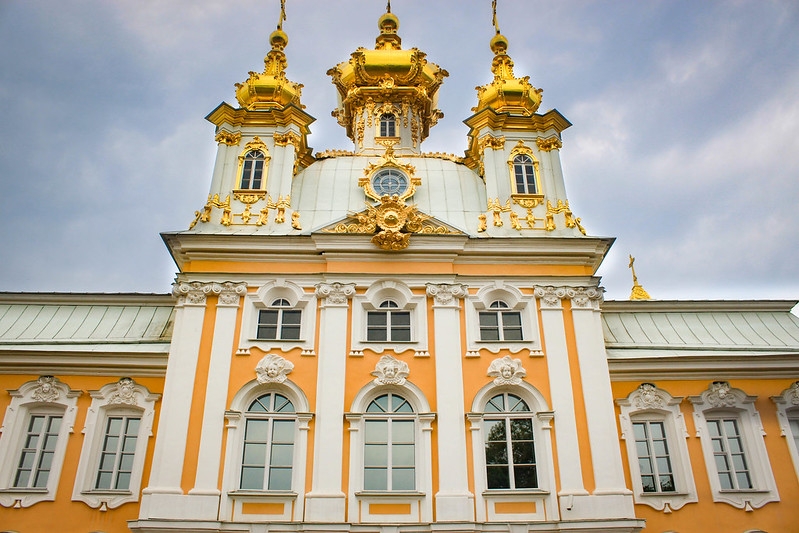
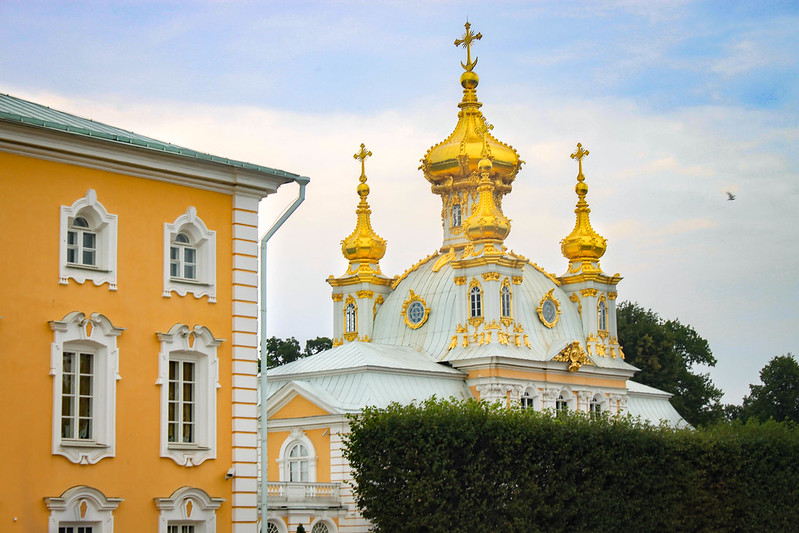
At the eastern wing of Peterhof Palace, you’ll find the Court Church.
It was commissioned by Elizabeth Petrovna, the Empress of Russia (1741-1762), and dedicated to the Apostles Paul and Peter.
Grand Peterhof Palace
Entrance fee: 600 Rubel (US $9)
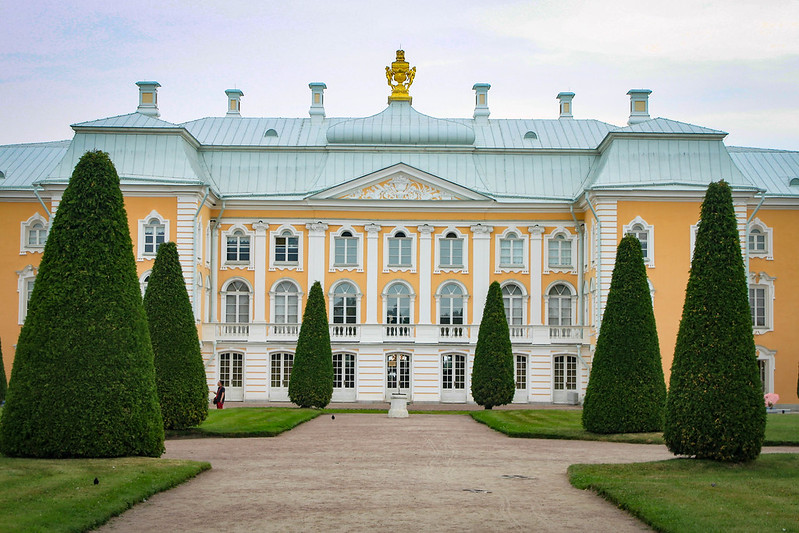
The Grand Palace is the highlight of Peterhof. So – you can expect a long line of people, especially in the summer, which makes it rather crowded and claustrophobic.
It’s worth it, though!
Peterhof Grand Palace is built in the Baroque style and features 30 impressive rooms. It boasts regal facades and elegant ornate interiors, porcelain vases, beautifully decorated fireplaces, pompous parquet floors, and large mirrors.
Photography and video are NOT allowed inside the Grand Palace.
Highlights of the Grand Palace:
- The Ball Room Inside the Grand Palace
- The Portrait Hall
- The War Paintings in Chesma Hall
- Wall Papers Made of Silk All over the Palace
Quick tips for visiting Peterhof Palace
Opening hours
Most of the areas are open from 9 am to 8 pm. The Great Palace is closed on Mondays. Fountains operate only from May to early October.
When to visit
The best time to visit is from early May to early October when the fountains are open. Crowds are heaviest during the weekends. So, my advice is to visit in the morning on a weekday from May to September.
How long to spend at Peterhof Palace
If you ask me, Peterhof Palace is a must for anyone visiting Saint Petersburg. But you should set a whole day aside for your visit.
Transportation takes 2 hours in total, and you’ll need at least 3 hours to explore the Peterhof estate and gardens (and have some lunch).
What to bring
Water and a warm sweater, even if you’re visiting in the summertime. I went there in August, and when it suddenly started raining, it got SUPER cold.
FAQ – Peterhof St Petersburg
Why is Peterhof Palace famous?
Peterhof Palace is famous for its stunning gardens, elaborate fountains, and grand architecture, often called the “Russian Versailles.”
What happened to the Peterhof Palace?
During World War II, Peterhof was severely damaged but has been beautifully restored to its former glory.
How much does it cost to go to Peterhof Palace?
Entry to Peterhof Palace and its gardens varies, but expect to pay around 1000-1500 rubles for a comprehensive visit.
Why should I visit Peterhof?
You should visit Peterhof for its breathtaking beauty, historical significance, and the chance to see one of the world’s most impressive fountain systems.
What is Peterhof?
Peterhof is a grand imperial estate located in St. Petersburg, Russia, known for its stunning gardens and palaces. Also referred to as the “Russian Versailles,” Peterhof features the grand Peterhof Palace, numerous fountains, and picturesque landscaping.